
Scottsdale, Arizona · Endoscopic & non-fusion spine surgery
Told you need a spinal fusion? There may be another option.
Dr. Issada Thongtrangan performs ultra-minimally-invasive and full-endoscopic spine procedures in Scottsdale — including motion-preserving alternatives to fusion. Second opinions and out-of-network consultations welcome.
Scottsdale, AZ · Second opinions welcome · Out-of-network & self-pay accepted
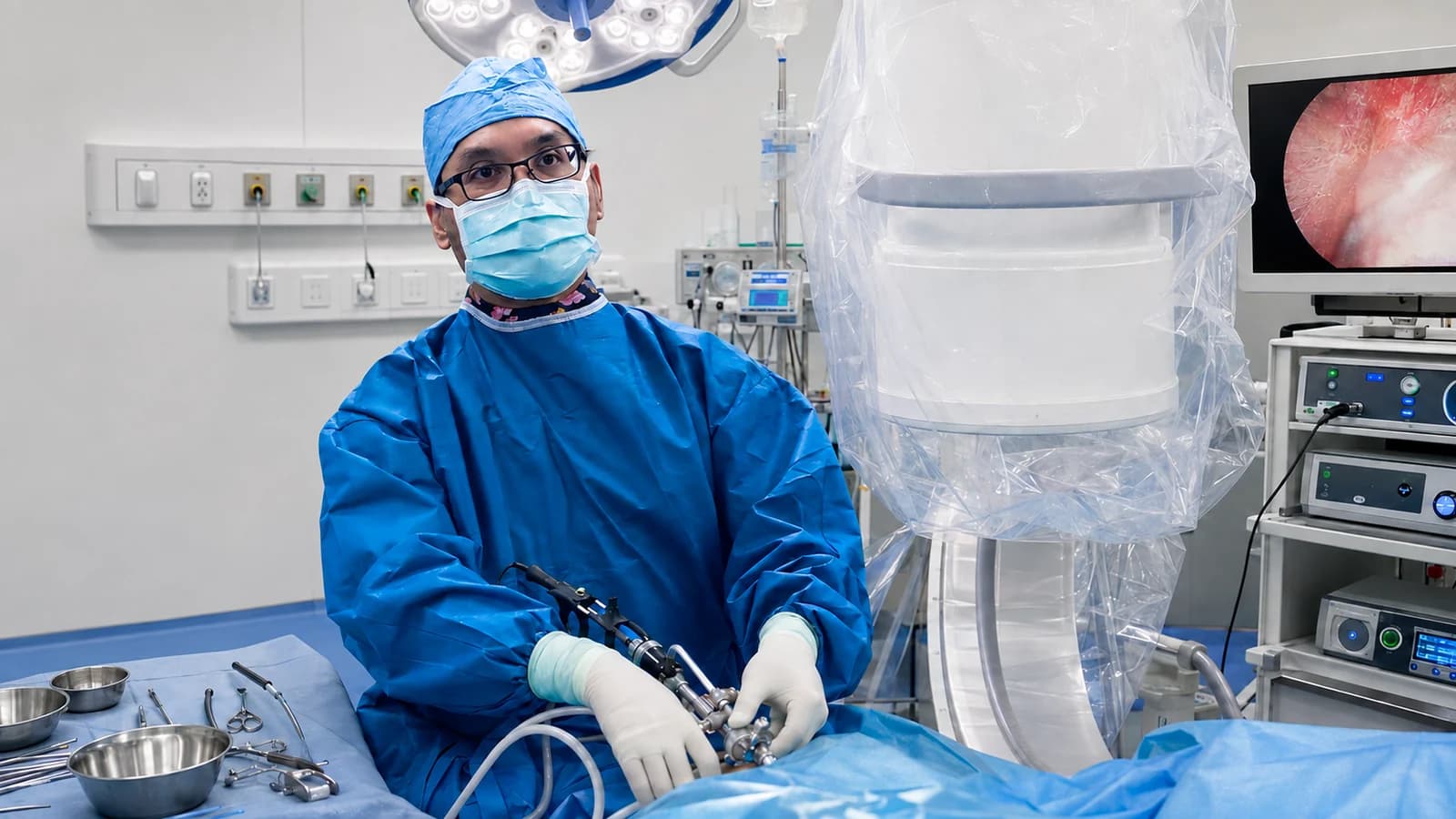
- Board certified, American Board of Orthopedic Surgery
- Member, North American Spine Society
- Fellowship — Stanford University Medical Center
- Fellowship — Texas Back Institute
What is different about this practice
This is not a general spine practice. It is built around a specific set of techniques.
Non-fusion options
Motion-preserving approaches that may be alternatives to spinal fusion for appropriately selected patients.
True full-endoscopic technique
Working through a single small portal with an endoscope, rather than a wider open exposure.
Recovery designed to be faster
Less tissue disruption than traditional open surgery. Most procedures are performed on an outpatient basis.
Self-pay & out-of-network friendly
A direct pathway for patients using out-of-network benefits or paying privately, without an insurance referral chain.
Concierge service
You have access to Dr. T and the MicroSpine team 24/7 for questions and concerns, both before and after your surgery.
See the procedure
Two short videos from Dr. T’s own library — what the technique is, and what it looks like inside the spine.
Unedited footage from the operating room is on the practice’s YouTube channel. It is linked rather than embedded here because it is real surgical video: Procedure footage (1), Procedure footage (2), Procedure footage (3).
Not all “minimally invasive” spine surgery is equal.
A small skin incision does not automatically mean minimal disruption underneath. Different procedures can vary substantially in how much muscle is moved or injured, how much bone is removed, whether screws or fusion are used, and how precisely the surgeon can see and treat the problem.
Compare the treatment approachesAccess pathway
How the surgeon reaches the spine — and what tissue must be moved, detached or preserved along the way.
Visualization
Direct endoscopic magnification, microscopic visualization and tubular access are different technologies, not interchangeable labels.
Procedure performed
A decompression, discectomy, disc replacement and instrumented fusion have different goals and different effects on anatomy and motion.
Experience & selection
The technique must match the diagnosis, stability, anatomy, health and goals — and it depends on appropriate surgeon training and experience.
The better question is not simply, “Is it minimally invasive?” Ask what tissues are disrupted, what anatomy is preserved, whether implants or fusion are required, and why that specific approach fits you.
Know your options
Three paths. Three different effects on motion.
If you have been told you need a spinal fusion, it is worth understanding what that involves and what the alternatives may be. Fusion is the right answer for some patients; for others, it is not the only answer. These options are not interchangeable, and candidacy depends on the diagnosis, stability, anatomy, symptoms, health and goals.
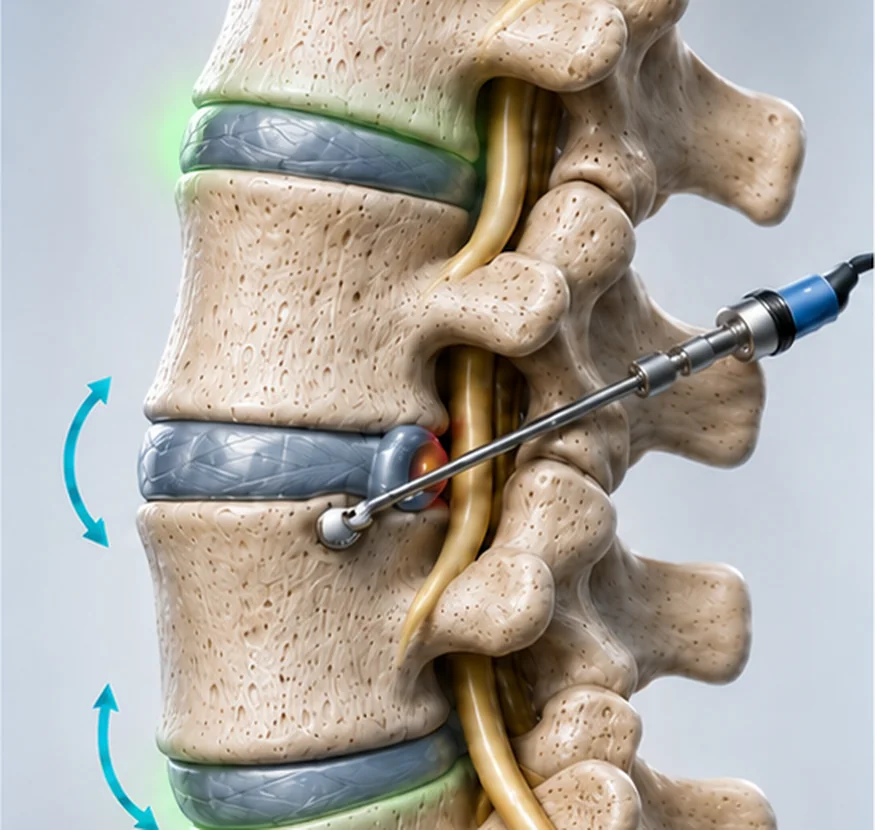
Least disruptive option when appropriate
Endoscopic spine surgery
Relieves pressure on a spinal nerve through a small, focused pathway.
Motion at the treated level
Preserved at the treated level
- Exposure
- Single small posterior or posterolateral portal
- Muscle & soft tissue
- Instruments pass between tissue planes
- Anesthesia
- Varies by procedure and patient
- Setting
- Typically outpatient
- Hardware
- Often no permanent implant
Potential long-term consideration
The treated level keeps moving
Nothing is fused, so no additional load is transferred to the neighboring levels
Because motion at the segment is preserved, the levels above and below are not loaded the way they are after a fusion. There is no adjacent-segment figure to quote here, because nothing is fused — but a disc can still herniate again, and age-related degeneration continues either way.
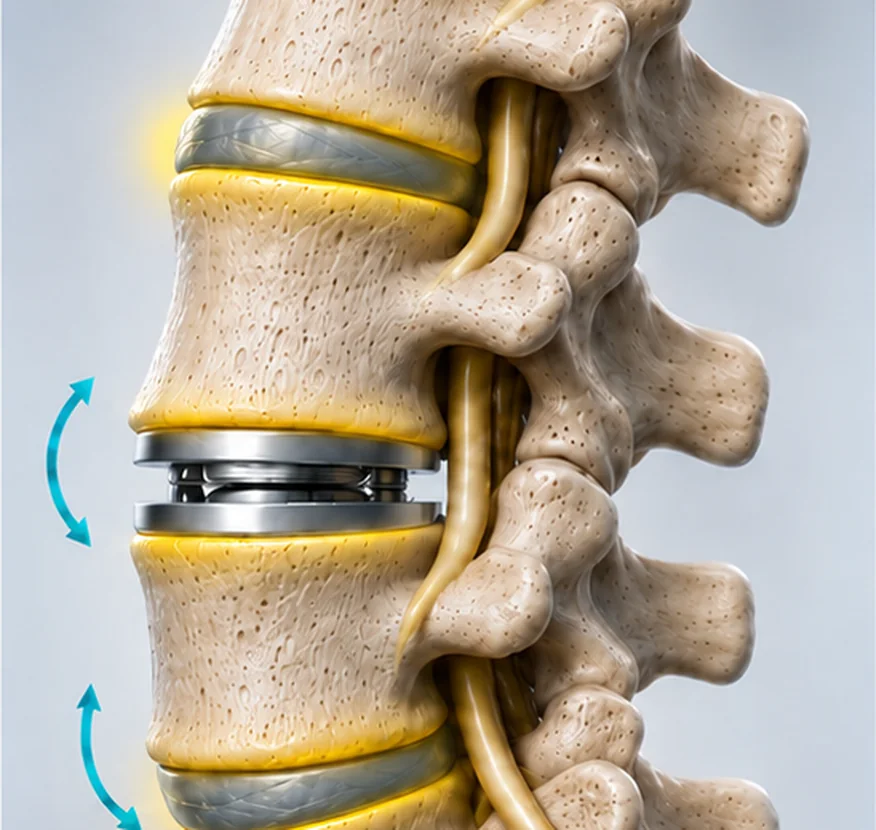
Motion-preserving reconstruction
Spinal disc replacement
Replaces a damaged disc while aiming to maintain movement.
Motion at the treated level
Intended to be preserved at the treated level
- Exposure
- Procedure-specific; usually an anterior surgical approach
- Muscle & soft tissue
- The approach follows tissue planes; nearby structures are carefully mobilized
- Anesthesia
- General anesthesia
- Setting
- Outpatient or short stay, depending on procedure and patient
- Hardware
- An artificial disc is implanted
Potential long-term consideration
Motion preserved, implant retained
About 2–5% needed surgery at a neighboring level within 5–7 years
An artificial disc is designed to keep the level moving, which is intended to limit added stress on neighboring levels. It is still an implant: wear, migration, subsidence and unintended bone formation are all considerations, and they vary by spinal region and device.
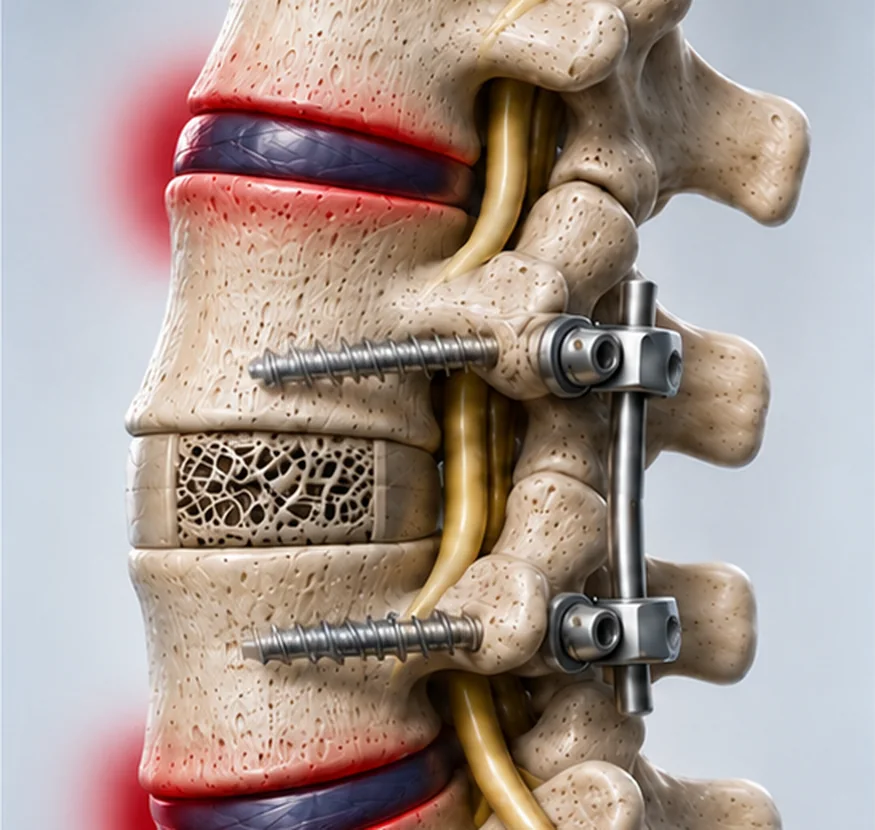
Stabilization when motion must be eliminated
Spinal fusion
Stabilizes an unstable, deformed or painful spinal segment.
Motion at the treated level
The segment is fused and no longer moves
- Exposure
- Wider opening; anterior, posterior, lateral or combined
- Muscle & soft tissue
- Muscle may be detached and/or retracted, depending on approach
- Anesthesia
- General anesthesia
- Setting
- Often an inpatient stay
- Hardware
- Screws, rods, cages and/or bone graft are commonly used
Potential long-term consideration
The treated level no longer moves
About 4–11% over the same 5–7 years, rising toward a third by ten years
Because the segment is fixed, the levels above and below carry more of the load. In the trials that compared both approaches directly, further surgery at a neighboring level was roughly two to three times as common after fusion; longer lumbar follow-up reports symptomatic adjacent-segment disease in about a third of patients by ten years. Nonunion, hardware problems and the possibility of further surgery are also part of the conversation.
Important. The percentages describe groups of patients in published trials, not a prediction about you — sources are listed below the table. These are general differences between approaches and are not a substitute for a clinical assessment. Which option is appropriate depends on your diagnosis, spinal stability, anatomy, symptoms, health and goals — including the possibility that surgery is not the answer. That can only be determined in a surgical consultation.
Where these figures come from
The percentages above are drawn from randomized trials and meta-analyses that measured both approaches against each other, using the same endpoint over the same follow-up period. They describe groups of patients in studies, not a prediction for any individual.
One distinction matters when reading any adjacent-segment number: some studies count changes visible on imaging, others count patients who developed symptoms, and others count patients who needed another operation. Those produce very different figures for the same procedure. Every number here counts a further operation or symptomatic disease, and says which.
Badhiwala JH, Platt A, Witiw CD, Traynelis VC. Cervical disc arthroplasty versus anterior cervical discectomy and fusion: a meta-analysis of rates of adjacent-level surgery to 7-year follow-up. J Spine Surg. 2020;6(1):217–232.
At seven years, adjacent-level surgery occurred in 4.3% after one-level cervical disc replacement and 5.1% after two-level, compared with 10.8% and 10.0% after fusion.
doi:10.21037/jss.2019.12.09Toci GR, Canseco JA, Patel PD, et al. The incidence of adjacent segment pathology after cervical disc arthroplasty compared with anterior cervical discectomy and fusion: a systematic review and meta-analysis of randomized clinical trials. World Neurosurg. 2022;160:e537–e548.
Across 19 randomized studies and 4,655 patients, symptomatic adjacent-segment disease occurred in 3.8% after cervical disc replacement, with reoperation in 3.1%.
doi:10.1016/j.wneu.2022.01.072Radcliff K, Spivak J, Darden BV II, Janssen M, Bernard T, Zigler J. Five-year reoperation rates of 2-level lumbar total disk replacement versus fusion. Clin Spine Surg. 2018;31(1):37–42.
At five years, adjacent-level reoperation occurred in 2.5% after lumbar total disc replacement versus 5.9% after fusion.
doi:10.1097/BSD.0000000000000476Zigler JE, Glenn J, Delamarter RB. Five-year adjacent-level degenerative changes in patients with single-level disease treated using lumbar total disc replacement with ProDisc-L versus circumferential fusion. J Neurosurg Spine. 2012;17(6):504–511.
At five years, adjacent-level surgery occurred in 1.9% after lumbar disc replacement versus 4.0% after fusion. Changes visible on imaging alone were far more common in both groups — 9.2% versus 28.6%.
doi:10.3171/2012.9.SPINE11717Ghiselli G, Wang JC, Bhatia NN, Hsu WK, Dawson EG. Adjacent segment degeneration in the lumbar spine. J Bone Joint Surg Am. 2004;86(7):1497–1503.
After lumbar fusion, symptomatic adjacent-segment degeneration requiring decompression or further fusion was projected at 16.5% by five years and 36.1% by ten years.
doi:10.2106/00004623-200407000-00020Jeong TS, Son S, Lee SG, Ahn Y, Jung JM, Yoo BR. Comparison of adjacent segment disease after minimally invasive versus open lumbar fusion: a minimum 10-year follow-up. J Neurosurg Spine. 2022;36(4):525–533.
With at least ten years of follow-up, symptomatic adjacent-segment disease occurred in 33.3% of lumbar fusion patients — 31.8% after open fusion and 34.9% after a minimally invasive approach.
doi:10.3171/2021.7.SPINE21408Lawrence BD, Wang J, Arnold PM, Hermsmeyer J, Norvell DC, Brodke DS. Predicting the risk of adjacent segment pathology after lumbar fusion: a systematic review. Spine. 2012;37(22 Suppl):S123–S132.
Clinical adjacent-segment pathology after lumbar fusion accrued at roughly 0.6–3.9% per year, with risk shaped by age, pre-existing degeneration, the number of levels fused and surgical factors.
In patients’ own words
Four patients, four different procedures — a decompression, a fusion, and two discectomies. Individual experiences, not a prediction of yours.
Most patients who come here have already been told what their options are by someone else. The reason they call is to find out whether that was the whole list.
Individual results vary. Any patient account describes one person’s experience and is not a prediction of your outcome.

Issada Thongtrangan, MD
Endoscopic & non-fusion spine surgery · Scottsdale, Arizona
Your surgeon
Issada Thongtrangan, MD
Known to his patients as Dr. T
Dr. T has built his practice around a narrow set of techniques rather than the full breadth of spine surgery. His focus is advanced, ultra-minimally-invasive and full-endoscopic procedures, including non-fusion and motion-preserving options.
Dr. T is dual fellowship-trained. He completed a fellowship in Complex Spine and Peripheral Nerve Reconstruction in the Department of Neurological Surgery at Stanford University Medical Center, followed by an orthopedic spine fellowship in Artificial Disc Replacement and Endoscopic Minimally Invasive Spine Surgery at the Texas Back Institute in Plano, Texas.
That combination — neurological and orthopedic spine training — is unusual, and it is why the practice spans complex nerve work, motion-preserving disc replacement and endoscopic decompression rather than only one of them.
His work is concentrated on the least invasive technique that will do the job: procedures performed through incisions typically smaller than 10 mm, with muscle spread rather than cut, and on an outpatient basis where appropriate.
He teaches endoscopic technique to other surgeons and speaks at spine surgery conferences. Patients travel to him from across the United States, from Canada and from outside North America — most often for a non-fusion alternative, or for a second opinion before agreeing to a fusion.
Credentials & training
- Board Certified
- American Board of Orthopedic Surgery (ABOS)
- Member
- North American Spine Society (NASS)
- Training
- Dual fellowship-trained — neurological surgery and orthopedic spine
Fellowship training
Complex Spine & Peripheral Nerve Reconstruction
Department of Neurological Surgery
Stanford University Medical Center · Stanford, CA
Orthopedic Spine — Artificial Disc Replacement & Endoscopic Minimally Invasive Spine Surgery
Texas Back Institute · Plano, TX
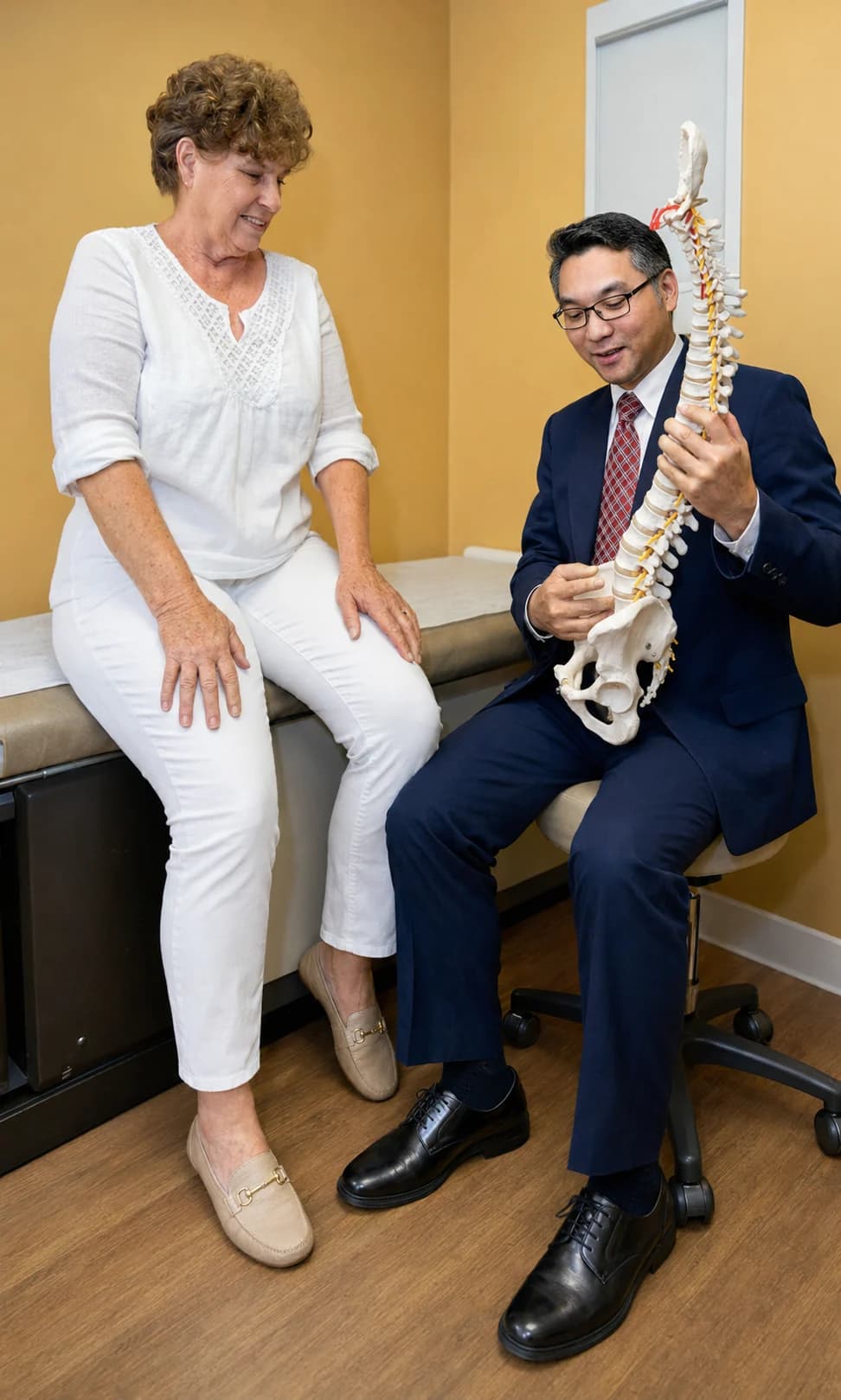
“Spinal fusion should be a last resort.”
Where a patient is a candidate, the aim of an endoscopic decompression or an artificial disc replacement is to take pressure off the nerve while preserving motion at that level, rather than fusing it permanently. Whether that applies to you depends on your imaging and your diagnosis.
Does any of this sound like you?
These are the patterns most often seen in patients who turn out to be candidates for an endoscopic or non-fusion procedure. This list is not a diagnosis.
- Pain that travels from your back into your buttock, thigh or leg
- Numbness or tingling in a leg, foot, arm or hand
- Weakness — a foot that catches, or a grip that has changed
- Pain that worsens when you sit, or when you stand and walk
- Physical therapy, injections or medication have not resolved it
- You have been told you need a spinal fusion
Recognizing yourself in this list does not mean you need surgery — and it does not mean you will be offered it. It means a consultation is likely to be worth your time.
A quick starting point
Three questions before you call
Your answers are passed to our team with your request so the conversation starts further along. This is not a diagnosis and it does not tell you whether surgery is right for you.
Traveling for care
Out-of-town & international patients
A significant share of our patients travel to Scottsdale for care — including Canadian snowbirds and patients seeking private, expedited treatment rather than waiting.
Start with a virtual consultation
Send your imaging and history before you travel. You will know whether the trip is worth making before you book anything.
No waiting list
Scheduling is handled directly by our office rather than through an insurance queue.
Private, self-pay pathway
Direct-pay and out-of-network arrangements are routine here, so cost is discussed up front.
Travel planned around the procedure
Our team will walk you through what to expect on arrival, how long to plan to stay in the Scottsdale area, and what follow-up looks like once you are home.
Post-operative follow-up, virtual or in person
Follow-up can be arranged either way, so a check-in does not have to mean another flight.
Concierge service
You have access to Dr. T and the MicroSpine team 24/7 for questions and concerns, before and after your surgery.
What full-endoscopic spine surgery actually involves
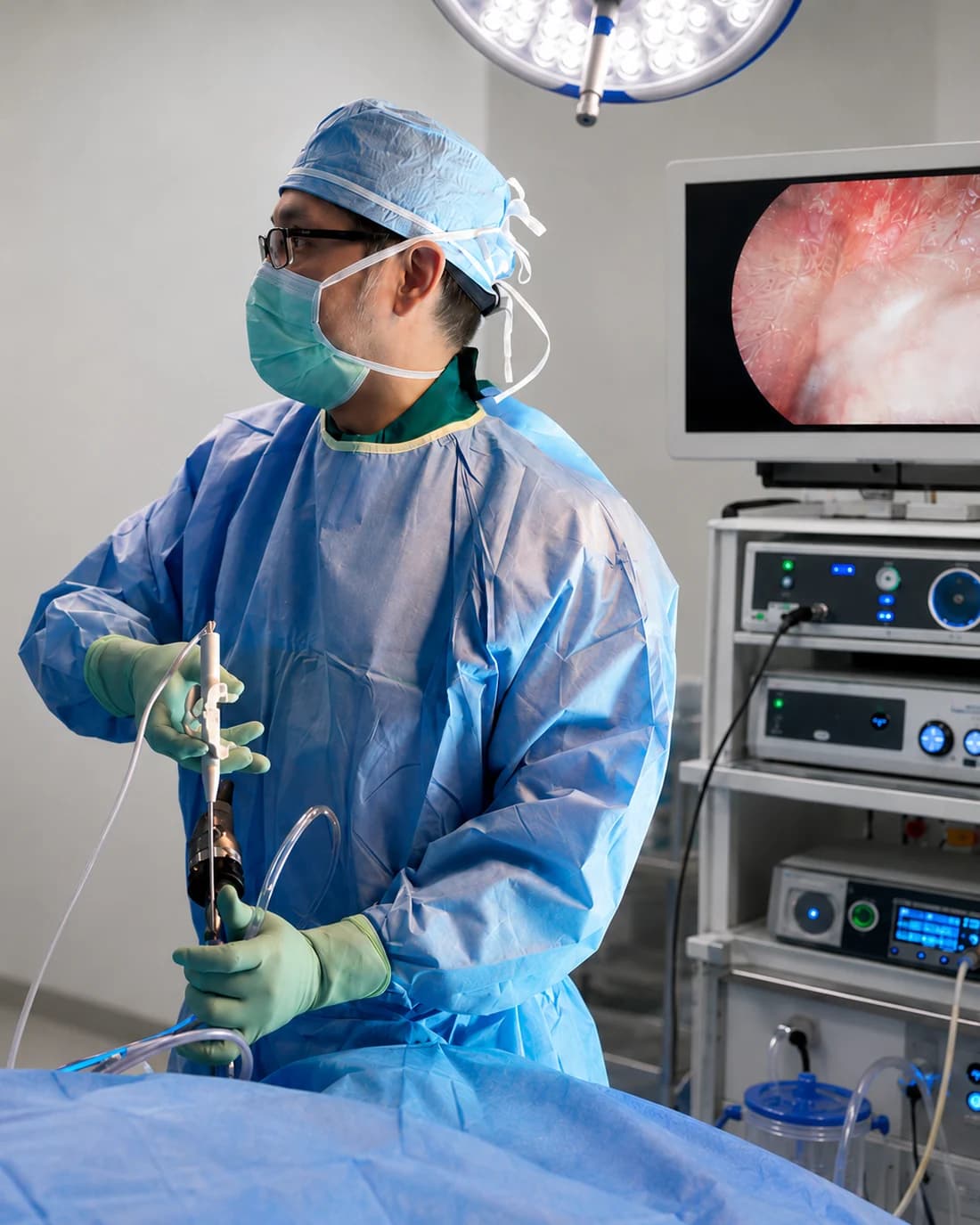
Full-endoscopic spine surgery is a technique for treating nerve compression in the spine through a single small portal, using an endoscope — a thin camera with a working channel — instead of a wider open exposure.
Before the procedure
Dr. T reviews your MRI or CT alongside your symptoms and physical exam. The imaging has to match what you are feeling. If it does not, surgery is not the answer, and you will be told that.
Access
A small incision is made and a working portal is placed to the target level under imaging guidance. Muscle is spread rather than cut and detached.
Visualization
The endoscope is passed through the portal. Dr. T works from a magnified live view of the nerve and disc.
Decompression
The specific tissue pressing on the nerve — herniated disc material, bone spur, or thickened ligament — is removed through the working channel. The goal is to take pressure off the nerve while leaving the stable structures intact.
Closure and going home
The portal is removed and the incision is closed. These procedures are typically performed on an outpatient basis, meaning patients generally go home the same day rather than being admitted.
Procedures performed at MicroSpine
- Endoscopic discectomy
- Endoscopic decompression
- Endoscopic foraminotomy
- Endoscopic rhizotomy
- Cervical & lumbar disc replacement
- Non-fusion / motion-preserving options
Every endoscopic procedure listed here can be performed in the lumbar spine (lower back) and in the cervical spine (neck).
Questions patients ask
What kind of spine surgeon is Dr. Issada Thongtrangan?
Dr. T is a spine surgeon in Scottsdale, Arizona whose practice is dedicated to ultra-minimally-invasive and full-endoscopic spine procedures, including non-fusion and motion-preserving options. Rather than offering general spine care, the practice is built around these specific techniques.
Where can I get minimally invasive spine surgery in Scottsdale?
MicroSpine is located at 14300 N Northsight Blvd, #213, Scottsdale, AZ 85260, and performs minimally invasive and full-endoscopic spine procedures. Consultations can be requested by phone at 602-833-2141 or through the form on this page.
Who treats herniated discs in Phoenix?
Dr. T evaluates and treats herniated discs for patients across the Phoenix metro, including Scottsdale, Tempe, Mesa and Chandler. Treatment may involve endoscopic discectomy, other minimally invasive options, or non-surgical care — which approach applies depends on your imaging and symptoms.
Is there a sciatica treatment specialist in Tempe?
Sciatica is usually a symptom of a nerve being compressed in the lower spine rather than a diagnosis on its own. Dr. T sees sciatica patients from Tempe and the surrounding Phoenix metro at the Scottsdale office, and evaluates whether the compression can be treated through a full-endoscopic approach.
Who performs endoscopic spine surgery in Maricopa County?
MicroSpine performs full-endoscopic spine procedures at its Scottsdale office, serving patients throughout Maricopa County. Endoscopic technique means working through a single small portal with an endoscope rather than a wider open exposure.
Which spine surgeon treats spinal stenosis in Mesa?
Dr. T treats spinal stenosis patients from Mesa and across the East Valley. Stenosis is a narrowing of the space around the spinal cord or nerves; depending on the pattern, it may be addressed with an endoscopic decompression rather than a fusion.
Where do I go for pinched nerve treatment in Scottsdale?
A pinched nerve in the spine can cause pain, numbness, tingling or weakness that travels into an arm or leg. Dr. T evaluates pinched-nerve patients at the Scottsdale office and, where appropriate, treats the compression through a full-endoscopic decompression.
Is non-fusion spine surgery available near Chandler?
Yes. Non-fusion and motion-preserving procedures are a focus of this practice, and patients travel from Chandler to the Scottsdale office. Whether a non-fusion approach is appropriate for you depends on your diagnosis, your imaging and your history — it is not right for every patient.
Do you see out-of-network and self-pay patients?
Yes. MicroSpine regularly works with patients using out-of-network benefits and with patients paying privately, including those traveling from outside Arizona. Cost is discussed directly and up front rather than routed through a referral chain.
Can I get a second opinion before agreeing to a fusion?
Yes, and it is one of the most common reasons patients contact this office. Bring your imaging and the recommendation you were given. You will get a direct assessment of whether a less invasive or non-fusion option applies in your case — including an honest answer if it does not.
About the conditions and the procedures
Written by Dr. T. General education, not advice about your particular case.
What is sciatica, and what does it feel like?
Sciatica is a common term for pain that starts in the low back or buttock and travels into the leg. It may feel sharp, burning, electric, shooting, or aching. Some people also have tingling, numbness, or weakness in the leg or foot. The symptoms often result from irritation or pressure on a nerve root in the lower back.
Can a herniated disc heal without surgery?
Many herniated discs improve without surgery. Initial treatment may include staying active within comfort, physical therapy, medications, and injections when appropriate. Surgery may be considered when pain remains severe or limiting, weakness progresses, or imaging shows nerve compression that matches the symptoms and examination.
Can sciatica be treated without lumbar fusion?
Yes. Many patients with sciatica do not need lumbar fusion. Treatment may include physical therapy, medications, injections, or a decompression procedure to relieve pressure on a nerve. Fusion is considered only when there is a specific reason, such as instability, deformity, or another condition requiring stabilization.
What is endoscopic lumbar spine surgery?
Endoscopic lumbar spine surgery uses a small camera and specialized instruments through a small incision to treat selected causes of nerve compression. The surgeon uses the endoscope to view the affected area and remove disc material, bone, or other tissue pressing on the nerve.
What is the difference between endoscopic lumbar discectomy and microdiscectomy?
Both endoscopic lumbar discectomy and microdiscectomy remove herniated disc material that is pressing on a nerve. Endoscopic surgery uses a small camera through a small incision, while microdiscectomy uses a small incision with magnification from a microscope or other visualization tools. The right approach depends on the disc location, anatomy, and surgical goals.
What are warning signs that sciatica needs urgent evaluation?
Urgent evaluation is important for new or worsening leg weakness, foot drop, numbness in the groin or inner thighs, loss of bladder or bowel control, inability to urinate, severe pain after major trauma, fever with severe back pain, or rapidly worsening symptoms. These signs can indicate significant nerve compression or another serious condition.
What is cervical radiculopathy?
Cervical radiculopathy is a pinched or irritated nerve root in the neck. It can cause pain that travels from the neck into the shoulder, arm, or hand. Some people also have numbness, tingling, weakness, or changes in reflexes. A herniated disc or age-related narrowing around a nerve can cause cervical radiculopathy.
What is cervical myelopathy, and is it serious?
Cervical myelopathy is spinal cord dysfunction caused by pressure on the spinal cord in the neck. Symptoms may include hand clumsiness, trouble with buttons or handwriting, balance difficulty, walking changes, arm or leg weakness, numbness, or bowel or bladder changes. Because spinal cord symptoms can worsen over time, cervical myelopathy requires timely evaluation.
What is endoscopic cervical spine surgery?
Endoscopic cervical spine surgery uses a small camera and specialized instruments through a small incision to treat selected causes of cervical nerve compression. The surgeon uses the camera to view the affected area and remove tissue or bone that is pressing on a nerve. The approach and procedure depend on the location and type of compression.
What is the difference between endoscopic cervical surgery and ACDF?
Endoscopic cervical surgery is often performed from the back or side of the neck to relieve pressure on a nerve while preserving the disc and motion when appropriate. Anterior cervical discectomy and fusion, or ACDF, is performed through the front of the neck, removes the affected disc, relieves nerve or spinal cord compression, and joins the treated bones together. The appropriate procedure depends on the location of compression, spinal alignment, stability, and individual anatomy.
What is cervical artificial disc replacement?
Cervical artificial disc replacement is a surgery in which a damaged disc in the neck is removed and replaced with an implant designed to preserve movement at that level. The procedure can relieve pressure on a nerve root or spinal cord in appropriately selected patients. It is also called cervical disc arthroplasty.
What is the difference between cervical artificial disc replacement and cervical fusion?
Both cervical artificial disc replacement and cervical fusion remove the damaged disc and relieve pressure on nerves or the spinal cord. With artificial disc replacement, the surgeon places an implant intended to preserve movement at the treated level. With fusion, the treated bones are joined together so that level no longer moves. The right choice depends on the disc problem, spinal alignment, stability, facet-joint condition, bone health, and other individual factors.
Request a consultation
Tell us how to reach you and someone from our team will follow up within one business day. If you have imaging, bring it — it is the single most useful thing you can arrive with.
Prefer to talk?
602-833-2141Monday–Friday, 8:00 AM – 5:00 PM (by appointment)
The office
MicroSpine14300 N Northsight Blvd, #213
Scottsdale, AZ 85260
Phone 602-833-2141
Fax 602-610-3878
HoursMonday–Friday, 8:00 AM – 5:00 PM (by appointment)
Consultations take place at the Scottsdale office. Procedures are performed at a separate surgical facility, which your team will confirm when your procedure is scheduled.
Only fetched when you open it, so it never competes with the rest of the page for load time.
“Spinal fusion should be a last resort.”